
The bestselling bioinformatics textbook
Bioinformatics Algorithms
Journey to the frontier of computational biology with the gold standard of bioinformatics education.
Autograded code challenges and a certificate, free to start. Prefer paper? Get the print book.
Pick up where you left off: your last lesson
Start reading today
The first five chapters are free on this site, one page per lesson. Chapters 6 to 11 are in the print book and the interactive course.
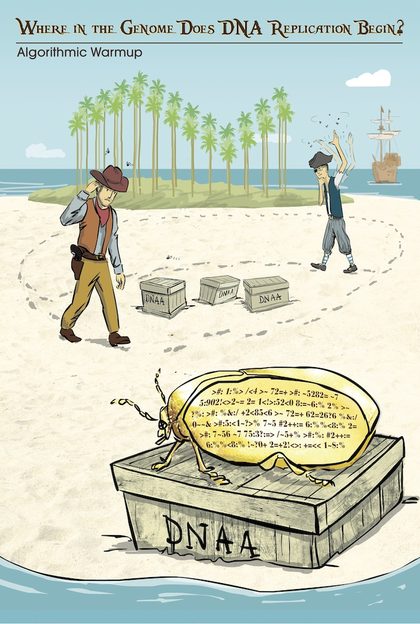 Chapter 1 · Replication OriginsWhere in the Genome Does DNA Replication Begin?Free to read
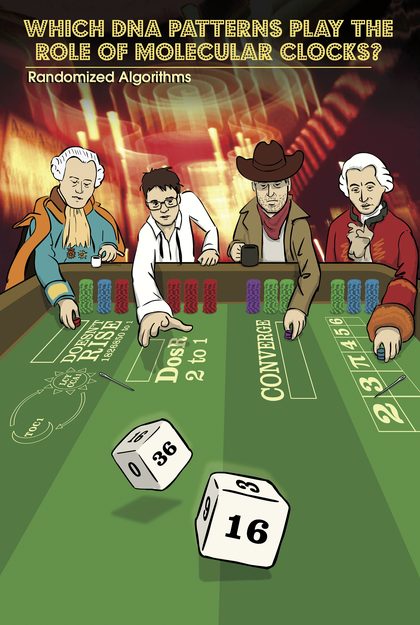 Chapter 2 · Motif FindingWhich DNA Patterns Play the Role of Molecular Clocks?Free to read
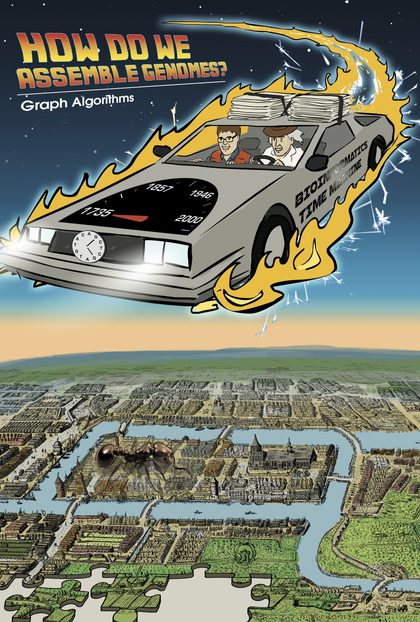 Chapter 3 · Genome AssemblyHow Do We Assemble Genomes?Free to read
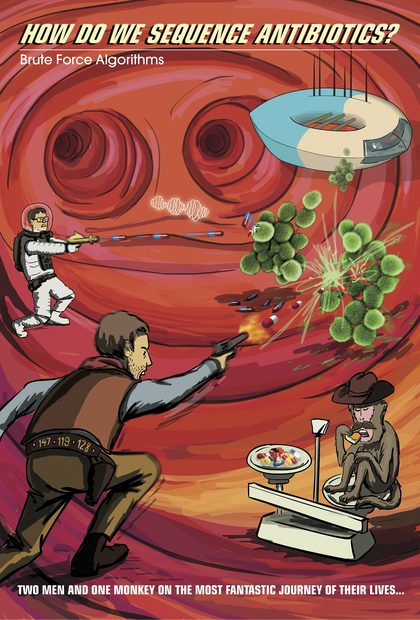 Chapter 4 · Antibiotic SequencingHow Do We Sequence Antibiotics?Free to read
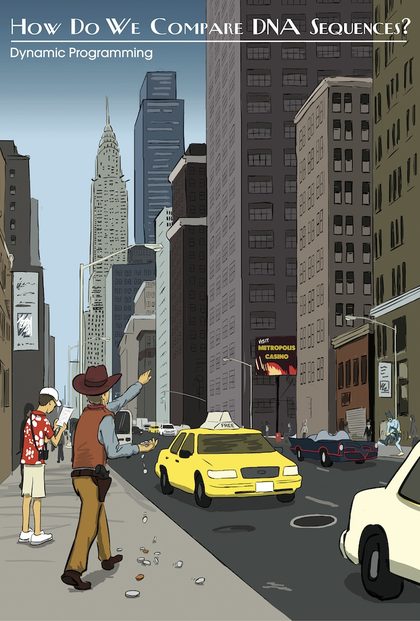 Chapter 5 · Sequence AlignmentHow Do We Compare Biological Sequences?Free to read
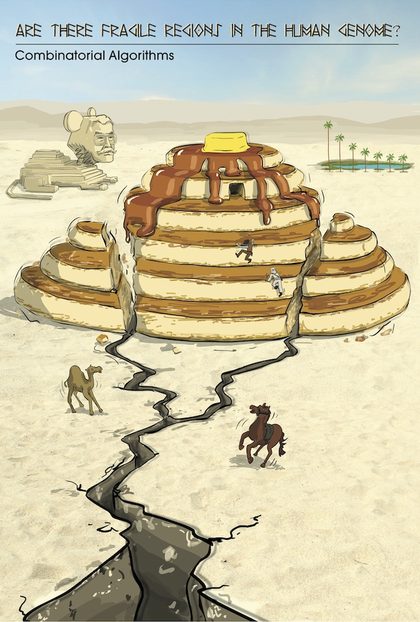 Chapter 6 · Genome RearrangementsAre There Fragile Regions in the Human Genome?In the print book
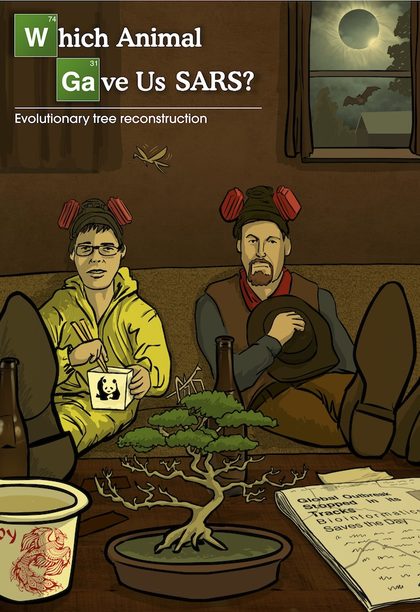 Chapter 7 · Evolutionary TreesWhich Animal Gave Us SARS?In the print book
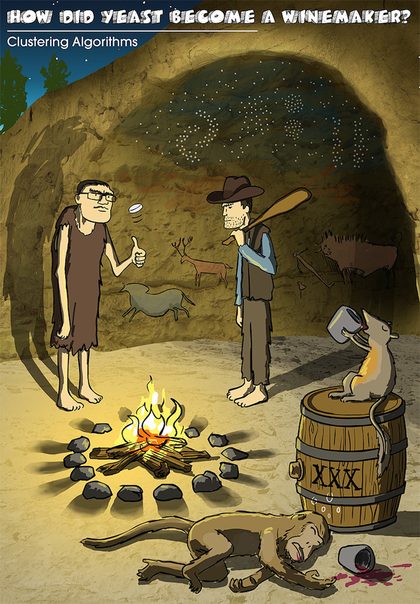 Chapter 8 · ClusteringHow Did Yeast Become a Wine-Maker?In the print book
 Chapter 9 · Read MappingHow Do We Locate Disease-Causing Mutations?In the print book
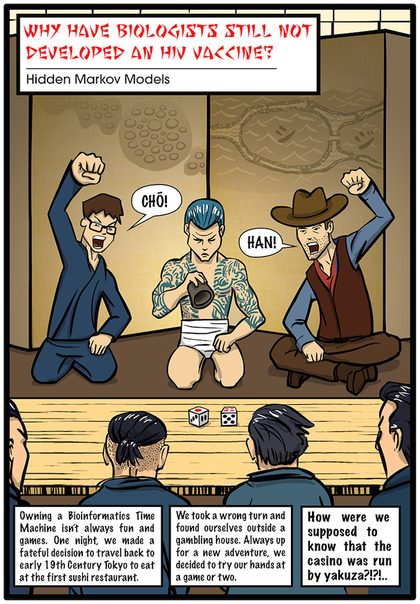 Chapter 10 · Hidden Markov ModelsWhy Have Biologists Still Not Developed an HIV Vaccine?In the print book
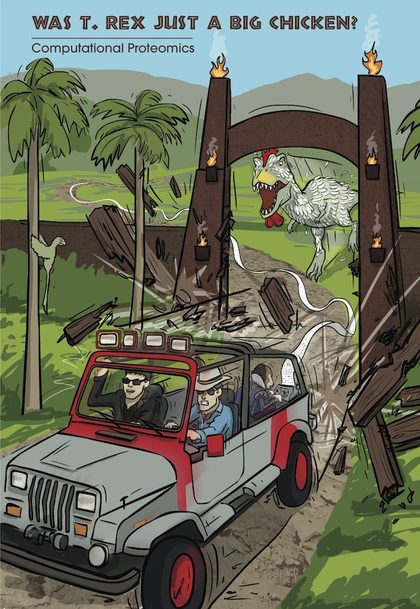 Chapter 11 · Peptide IdentificationWas T. rex Just a Big Chicken?In the print book
Play with the algorithms
Every free chapter has interactive figures you can poke at. Each one shows its work, one step at a time.
Draw a genome's GC skew
Watch the skew fall and rise across real E. coli DNA and find where replication begins.
Hunt for hidden messages
Slide a window along the Vibrio cholerae origin and find the 9-mers that clump.
Build a motif logo
Edit a motif matrix and see its profile, entropy and logo change, then roll the profile dice.
Watch Gibbs sampling converge
Step a randomized algorithm as it homes in on implanted motifs.
Assemble a genome with a de Bruijn graph
Glue k-mers into a graph and walk the path that spells the genome.
Find an Eulerian cycle
Step through Euler's algorithm, and see why Königsberg has no answer.
Shatter a peptide
Compute the theoretical spectrum of a cyclic peptide, one subpeptide at a time.
Sequence an antibiotic from a noisy spectrum
Use the spectral convolution and a leaderboard to recover Tyrocidine B1.
Make change three ways
Greedy, recursive and dynamic programming, side by side.
Align two sequences
Fill the alignment grid cell by cell, then backtrack to the best alignment.
Learn by doing
This is an active learning textbook. You meet each algorithm by working through the biology, then you implement it yourself.
STOP and Think
Questions woven into the text make you reason about each idea before we reveal it.
Hundreds of code challenges
Implement every algorithm, then check your work on Rosalind or with the autograders in our interactive course.
Three ways to learn from the book
Reading is free. Doing is where the learning happens.
Interactive text
Free to try then $79.95 once
- All eleven chapters, always up to date
- Hundreds of autograded code challenges
- Debug datasets for every problem
- Certificate of completion
Print book, direct
$89.95
- All eleven chapters
- Detours and Charging Stations not included online
- Our best price, shipped from us
Taught at more than 230 institutions in over 45 countries
We share slides, quiz questions, and a discounted classroom copy of the interactive text with instructors. See what we offer instructors.
“This lively and unique text on bioinformatics motivates algorithmic thinking with an abundance of up-to-date examples from molecular biology.”
“I can’t imagine a more rewarding or worthwhile subject to work in than bioinformatics, and both Prof. Compeau and Prof. Pevzner played a significant part in my discovery and continued work in the field!”